
Oncological micropigmentation course
Specialized training available in online and blended learning formats
Specialize in oncological micropigmentation with a real clinical method and learn to work on irradiated, scarred and reconstructed skin, mastering 3D areola tattooing with safety, technical criteria and hyperrealistic results.
Learn to perform 3D areolar reconstruction, breast scar camouflage, and advanced oncological micropigmentation with a scientific, emotional, and deeply practical approach.
This oncological micropigmentation course is designed for professionals who want to move beyond conventional micropigmentation and master high-demand, high-value paramedical treatments.
- +41 classes
- 14 real cases
- Mentoring included
- Professional certification
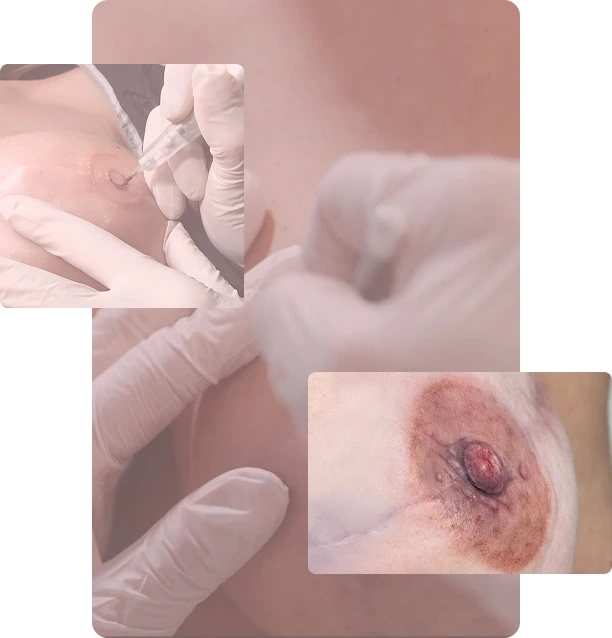
Are you looking for a truly comprehensive course in oncological micropigmentation?
If you’ve been looking for a course in oncological micropigmentation or a course in scar camouflage, you’ve probably already encountered the same problem:
- A lot of superficial theory
- Little real-world practice
- Generic explanations
- Casi ningún criterio clínico aplicado a piel oncológica real
The reality is this:
- Tattooing an eyebrow is not the same as working on irradiated skin.
- A reconstructed areola does not respond the same way as healthy skin.
- When you don't understand how the tissue will react, mistakes appear.
That’s why this program is different.
Here you don’t just learn a technique. You learn to understand the skin, anticipate results, and work confidently on real, complex cases.
This is not just another course. Cancerous skin doesn't allow for improvisation.
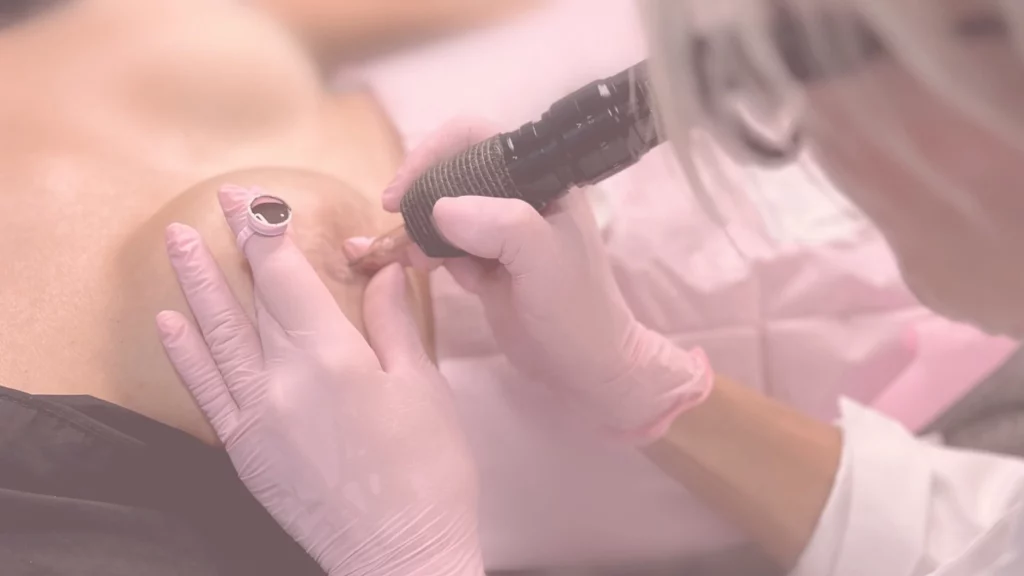
Do you struggle with complex skin types and don't feel completely confident?
Perhaps you already do cosmetic micropigmentation.
But when a scar, fibrosis, or radiation-damaged skin appears, doubts begin:
- You don't know how the pigment will react after healing.
- You're worried about causing an artificial or irreversible result.
- You don't understand why some colors change over time
- You feel that traditional training does not go in enough depth.
- You have learned techniques, but not clinical judgment.
And that creates insecurity.
Because working on cancerous skin requires much more than "knowing how to tattoo". You need real knowledge.
Who is this course for?
For micropigmentation specialists who want to specialize in premium treatments
Current starting point
You do eyebrows, lips or eyeliner and you already have experience in aesthetic micropigmentation.
What's holding you back
You feel that the market is saturated and competing on price no longer makes sense.
What you want to achieve
Differentiate yourself with high-demand oncological and paramedical treatments, increasing the perceived value of your work and positioning yourself at a more advanced level.
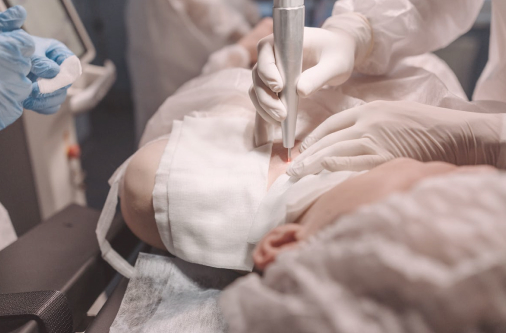
For professionals who feel insecure when working with scars or irradiated skin
Current starting point
Have you seen complex cases in consultation or have you been asked for treatments that you don’t know how to handle safely?
What's holding you back
You don’t understand how the pigment will react on irradiated or scar tissue and you fear making mistakes that are difficult to correct.
What you want to achieve
Learn to work with real clinical judgment and feel confident even on complex skin.

For specialists in restorative aesthetics or the health sector
Current starting point
You work with cancer patients, cosmetic surgery, or post-operative recovery.
What's holding you back
You want to incorporate oncological micropigmentation, but the training you find is too basic.
What you want to achieve
Integrate hyper-realistic and technically sound procedures into your practice.
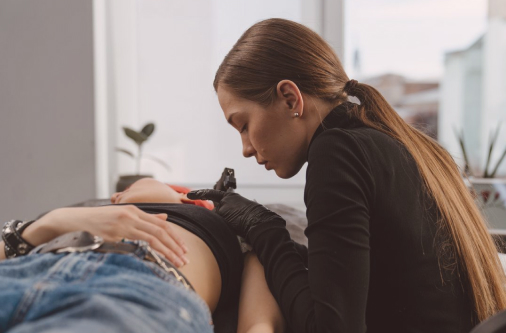
For people seeking a profession with purpose
Current starting point
You want to dedicate yourself to something that combines aesthetics, human impact, and professional growth.
What's holding you back
You don’t want to do empty or repetitive treatments without an emotional connection.
What you want to achieve
Ayudar a otras personas a recuperar seguridad, feminidad y autoestima después de un proceso oncológico.
Who is this course for?
For micropigmentation specialists who want to specialize in premium treatments
Current starting point
You do eyebrows, lips or eyeliner and you already have experience in aesthetic micropigmentation.
What's holding you back
You feel that the market is saturated and competing on price no longer makes sense.
What you want to achieve
Differentiate yourself with high-demand oncological and paramedical treatments, increasing the perceived value of your work and positioning yourself at a more advanced level.
For professionals who feel insecure when working with scars or irradiated skin
Current starting point
Have you seen complex cases in consultation or have you been asked for treatments that you don’t know how to handle safely?
What's holding you back
You don’t understand how the pigment will react on irradiated or scar tissue and you fear making mistakes that are difficult to correct.
What you want to achieve
Learn to work with real clinical judgment and feel confident even on complex skin.
For specialists in restorative aesthetics or the health sector
Current starting point
You work with cancer patients, cosmetic surgery, or post-operative recovery.
What's holding you back
You want to incorporate oncological micropigmentation, but the training you find is too basic.
What you want to achieve
Integrate hyper-realistic and technically sound procedures into your practice.
For people seeking a profession with purpose
Current starting point
You want to dedicate yourself to something that combines aesthetics, human impact, and professional growth.
What's holding you back
You don’t want to do empty or repetitive treatments without an emotional connection.
What you want to achieve
Ayudar a otras personas a recuperar seguridad, feminidad y autoestima después de un proceso oncológico.
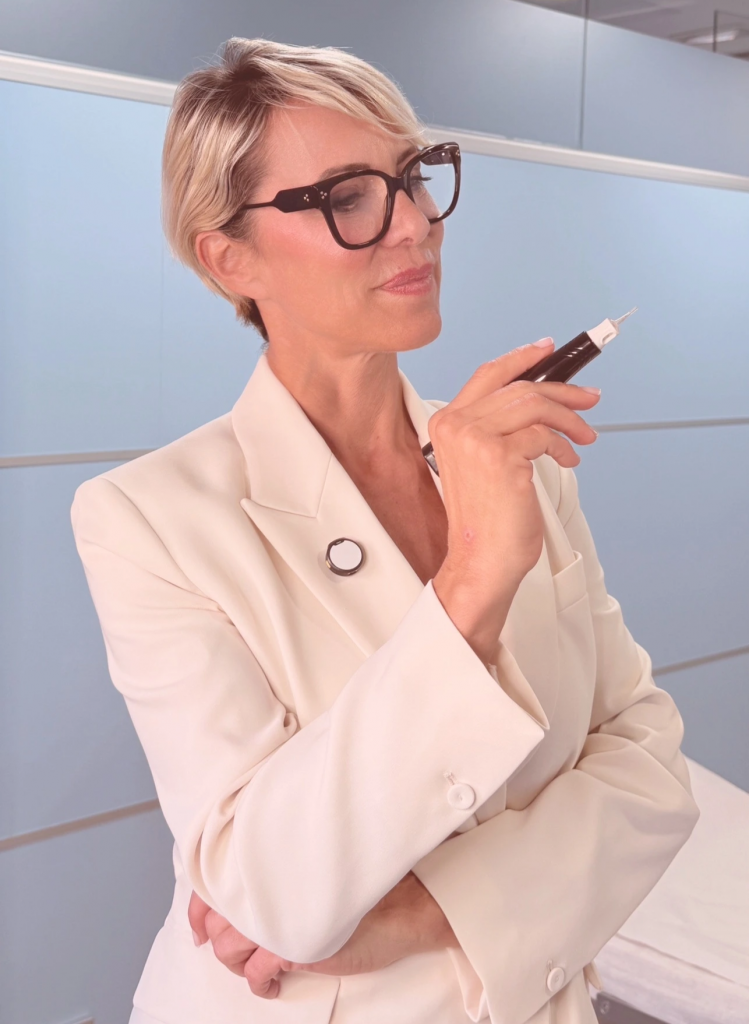
I am Olga Grande
Specialist in Oncological and Paramedical Micropigmentation.
I have trained hundreds of professionals in 3D areolar reconstruction and advanced paramedical micropigmentation, helping them to work with greater safety, technical expertise, and natural results.
This master’s program is based on real clinical practice.
Not recycled theory.
Complete Program of the Master's Degree in Oncological Micropigmentation
MODULE 1
Introduction to Oncological Micropigmentation
What is this module for?
You will understand the true physical and emotional impact of oncological micropigmentation and how to become a professional prepared to work on vulnerable skin with sensitivity and safety.
You will learn
- What differentiates oncological micropigmentation from conventional aesthetics?
- Emotional impact of scarring and breast reconstruction
- Professional and ethical role of the paramedical specialist
- Realistic expectation of treatment
- How to approach cancer patients with trust and empathy
MODULE 2
Fundamentals of the skin and its influence on micropigmentation
What problem does it solve?
You can’t work on skin properly if you don’t understand how it works.
This module teaches you how to read the skin before implanting pigment.
You will learn
- Anatomy and functions of the skin
- Influence of melanin on the final result
- Differences between biotypes and phototypes
- Pigment behavior according to skin type
- How thin, fibrotic, or irradiated skin responds
MODULE 3
Pigmentology and advanced colorimetry
Here's the real technical difference.
You won’t learn memorized recipes.
You will learn to understand color.
Objective: To achieve natural and stable results even on complex skin.
You will learn
- Chemistry of organic and inorganic pigments
- Differences between tattoo and PMU
- INCI and actual composition of the inks
- Hydropigmentology applied to oncological micropigmentation
- Advanced neutralization of dark, cool or purplish tones
- Proper use of titanium dioxide
- Prevention of residual color
MODULE 4
Types of cancer and breast cancer surgeries
Why do you need to learn this?
Because not all surgeries leave the same tissue. And not all scars should be treated the same way.
You will learn
- Types of breast cancer
- Oncological surgical techniques
- Unilateral and bilateral mastectomy
- Immediate and delayed breast reconstruction
- Reconstruction of the nipple-areola complex (NAC)
- How each surgery influences pigment implantation
MODULE 5
3D micropigmentation of the areola-nipple complex
What problem does it solve?
Learn to create hyper-realistic areolas with an optical illusion of volume.
You will learn
- Anatomical design of natural areolas
- Location, shape and proportion
- Construction of hyperrealistic lights and shadows
- Visual creation of relief without physical volume
- Custom color mixes
- 3D drawing step by step
MODULE 6
Advanced 3D Techniques and Maneuvers
Accuracy changes the outcome.
You will learn
- Specific patterns for delicate fabric
- Correct needle and cartridge configuration
- Recommended dermographs
- Exact depth according to tissue
- Clean and homogeneous implementation
- Work protocols and number of sessions
- Pre- and post-treatment care
MODULE 7
Real clinical cases
Real cases. Real skin. Real technique.
We don’t work on simulations here.
You'll see
- Bilateral oncological tattoo on delicate skin
- Unilateral tattoo step by step
- Actual evolution over several sessions
- Corrections and clinical decision-making
- How to adapt technique according to scar and tissue response
MODULE 8
Contraindications and clinical safety
Knowing when NOT to work is also part of being professional.
You will learn
- Temporary and absolute contraindications
- Warning signs in irradiated tissue
- Correct waiting times after surgery
- Safety and hygiene protocols
- Pre-patient assessment
Master this subject matter
A course in oncological micropigmentation using a clinical method
I developed my own method after conducting a scientifically rigorous study on the impact of scars on:
- Self-esteem
- Social life
- Intimate and sexual life
Based on this analysis, I designed specific protocols, applying advanced paramedical micropigmentation techniques with visible results in real patients.
Learn to work on real cancerous and scarred skin with a clinical approach, scientific criteria, and hyper-realistic results.
“We don’t teach techniques. We develop critical thinking skills.”
The difference between guessing and mastering the technique
In this master’s program you will not only learn how to mix pigments.
You will learn:
- What's really inside each formula
- How a pigment ages inside the skin
- When to use titanium dioxide and when to avoid it
- How to neutralize dark or purplish tones on irradiated tissue
- How to avoid residual color and unwanted migration
- How to predict long-term pigment behavior

Your work isn’t for a photo today. It’s to complement that skin for years to come.
What will you achieve upon completion of this oncological micropigmentation course?
Tackling complex skin types with complete confidence and understanding why color fades or changes after healing
Upon completion of the training you will be able to perform advanced treatments of:
- Hyperrealistic 3D areolar reconstruction
- Oncological micropigmentation post unilateral mastectomy
- Oncological micropigmentation post bilateral mastectomy
- Correction and neutralization of unwanted colors
- Color loss correction
- Improvement and optical correction of areolar asymmetries
But above all, you will develop something that almost no other course teaches: Real technical judgment.
You will know:
- Properly assess skin before working on it
- Adjust depth, needle and speed according to the fabric
- Understand how each pigment heals
- Design natural and harmonious results
- Work without improvising or relying on "memorized tables"
When you understand the science, the results speak for themselves.
Real cases · Real skin · Real results
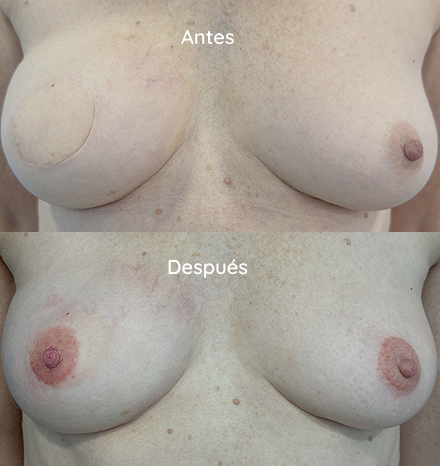
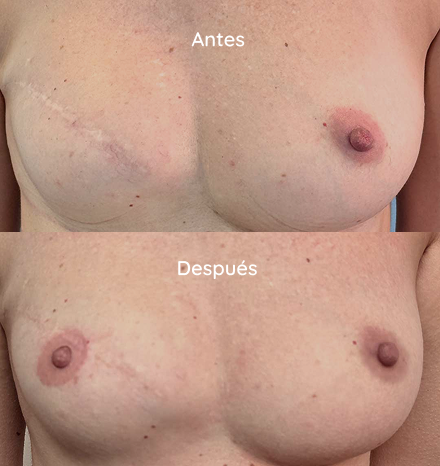
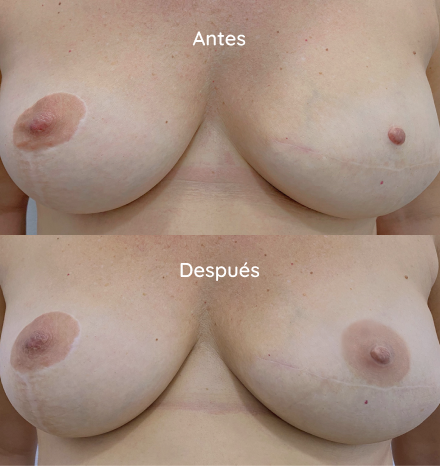

What does the Master's program include?
- 13 specialized modules
- 41 complete classes
- 14 real clinical cases
- Real-time practical videos
- Downloadable e-books
- Group mentoring
- Digital certificate
What our students say


“As a student of Omicroart, I have had the opportunity to learn the techniques and skills necessary to perform high-quality paramedical and oncological tattoos, witness and learn a scar recovery technique with regenerative results for scars that only this center has pioneered in its innovative discovery. The course has been an incredible experience; the instructor, an expert in Paramedical and Oncological Tattooing, has created an excellent and comprehensive curriculum that covers everything from theory to practice. Having the complete course with live videos, case examples, and all the training in PDF format allows me to refer to it for life whenever I have questions.
I appreciated how the course focused on the importance of effective interviewing and strategies for empathizing with the patient. I learned to create personalized designs and work with different skin types, which has allowed me to help my clients regain their confidence and self-esteem.
The instructor’s support and feedback have been exceptional, and the learning environment has been very welcoming and motivating. I am excited to apply my new skills to make a difference in the lives of oncology patients and paramedics. Olga, I sincerely thank you for everything you have taught me, and it is incredibly rewarding to feel what you convey with such care, professionalism, and commitment to changing people’s lives.
Highly recommended for anyone passionate about tattooing and patient care!
Andrea Cala
“I want to express how grateful I am for having completed the paramedical and oncology tattoo master’s degree. It has been a deeply enriching experience, both professionally and personally. This master’s degree has given me solid knowledge, confidence in practice, and a much more human perspective on the work we do with people who have gone through difficult processes.
I want to especially highlight Olga, an exceptional professional and, above all, a truly generous person. She not only teaches techniques, but also wholeheartedly shares her experience, her tips, her methods, and those “little secrets” that make all the difference and that not everyone is willing to give. This open and honest way of teaching demonstrates great character and a genuine commitment to her students’ development.
Her way of explaining things is approachable, clear, and very practical. It’s obvious she cares that we learn well, gain confidence, and leave prepared to work with responsibility, sensitivity, and respect. Thanks to her, I’ve learned much more than just tattooing: I’ve learned to observe, to listen, and to understand the significant impact our work can have on other people’s self-esteem and well-being.
This master’s program has undoubtedly exceeded my expectations, and I highly recommend it. Thank you, Olga, for your generosity, dedication, and for sharing so much from the heart!
Laura Linares
“I took a training course with her in paramedical and oncological micropigmentation, and it’s the best thing that’s ever happened to me! Olga is approachable and very professional, and together with Naomi, they make a great team! I recommend her 200% as a trainer and for the results of her treatments! Eternally grateful.”
Vanessa Millan
Do I need in-person training?
There is the possibility of doing clinical internships.
But the reality is this:
- The course is designed so that you don't necessarily need them.
The level of detail, the real-life examples, and the step-by-step explanations allow you to confidently apply the technique from the very beginning.
Take the next step in your career
- Oncological micropigmentation is not a fad.
- It is a specialization with a present and a future.
If you want to stand out, work safely, and reach a higher professional level, this is your moment.
This offer is not always available.
I work with specific and limited promotions to guarantee the quality of learning.
When the promotion ends, the price returns to its original value.
For a limited time only
Frequently asked questions
Do I need prior experience?
It is not mandatory, although having basic knowledge of micropigmentation will facilitate learning.
Can I learn online?
Yes. The course is designed so you can learn from home with support, mentoring, and detailed real-world case studies.
What materials do I need?
We will provide you with a complete guide to recommended materials, dermographs, needles, and pigments.
How long does the course last?
You will have access to online training to advance at your own pace and review classes whenever you need.
Do I need in-person training?
There is the option of doing clinical internships.
But the reality is this:
👉 The course is designed so that you don’t need it.
The level of detail, the real-life examples, and the step-by-step explanation allow you to confidently apply it from the very beginning.